AI/ML

Post Image

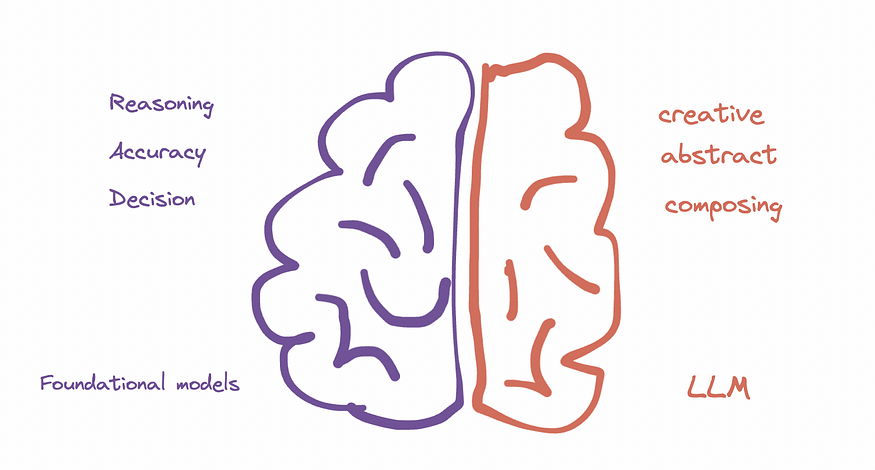
How to Adopt LLMs in your business: A Complete Guide

It is a deceptively simple construct — an LLM(Large language model) is trained on a huge amount of text data to understand language and generate new text that reads naturally. The model is then able to execute simple tasks like completing a sentence “The cat sat on the…” with the word “mat”. Or one can even generate a piece of text such as a haiku to a prompt like “Here’s a haiku:” But it gets even cooler! Once an LLM...

Read


Post Image

Generative AI in Software Architecture: Don’t Replace Your Architects Yet!

This article is part of a series where we explore how Generative AI can be utilized for the various stages in the software development lifecycle. You can read this post about the methods and tools used for experimentation.Software architecture is essential when building software; it ensures that the developed software satisfies the business needs and sets up technology teams for success. This article explores how Generative AI, specifically GPT, can assist in software architecture.Software Architecture is typically handled by engineers with different...

Read
Post Image

Enhancing Domain-Driven Design with Generative AI

Creating robust and maintainable applications that align closely with business requirements is a constant challenge in software development. Domain-Driven Design (DDD) has been quite successful in tackling this challenge. By placing the domain at the heart of the development process, DDD empowers developers to create highly scalable, modular, and business-oriented solutions. In this article, we will examine the potential of using Generative AI in Domain Driven Design. In our experiment, we developed a time-tracking application using Generative AI tools to...

Read
Post Image

An Agile Kickstart with Generative AI for Business Analysis

Image courtesy of Adobe Stock Leveraging artificial intelligence (AI) tools can significantly expedite the business analysis process. By utilising advanced AI models like GPT, analysts can quickly analyse problem statements, define high-level features and objectives, and generate epics and user stories. AI tools can streamline requirements gathering and save time and effort while enabling structured and organised analysis. As part of an exploratory exercise, we tried to find out how OpenAI's GPT can be leveraged to kickstart the business analysis...

Read
Post Image

Optimising Software Engineering Practices with AI

In the world of software development, Generative AI has been a topic of both excitement and concern. Its potential to automate and enhance various aspects of the development process raises questions about its impact on the developer community. As developers, it is crucial to understand the reality behind the hype and explore how Generative AI can be effectively utilised in real-world project scenarios.In this blog series, we capture our process and learnings from an experiment to develop a time-tracking application...

Read
Post Image

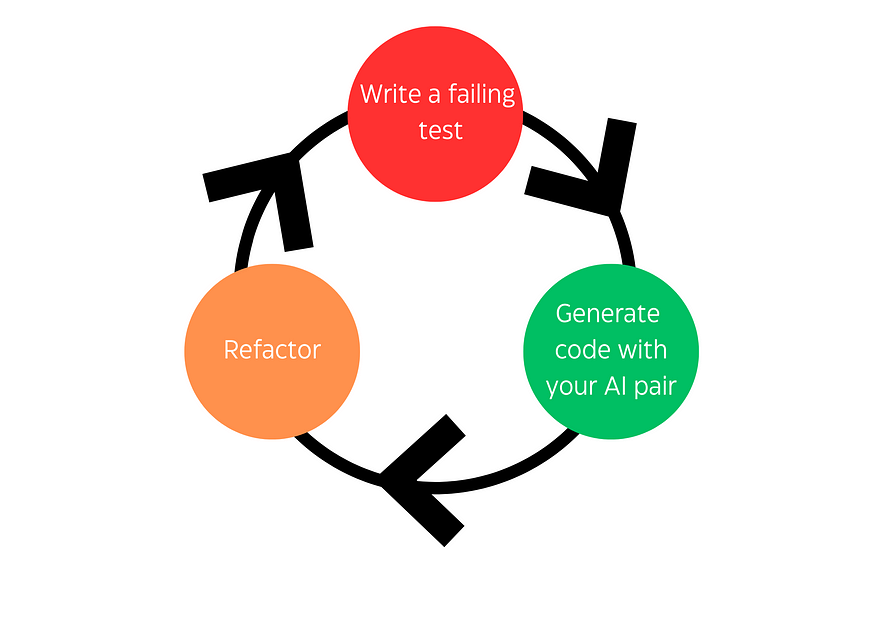
Test Driven Generation — Use AI as a pair for programming.

Written by Amitb and Vighnesh Pathrikar Test Driven Generation Cycle Have you ever found yourself struggling to refactor your code to adhere to SOLID principles or convert user requirements into code? Did TDD or Test-Driven Development feel slow? Have you ever wished for a tool that could make this process easier and more efficient? Well, look no further! With the latest generative AI solution, ChatGPT, you can now easily refactor your code, convert user requirements into code, and even create tests — all...

Read
Post Image

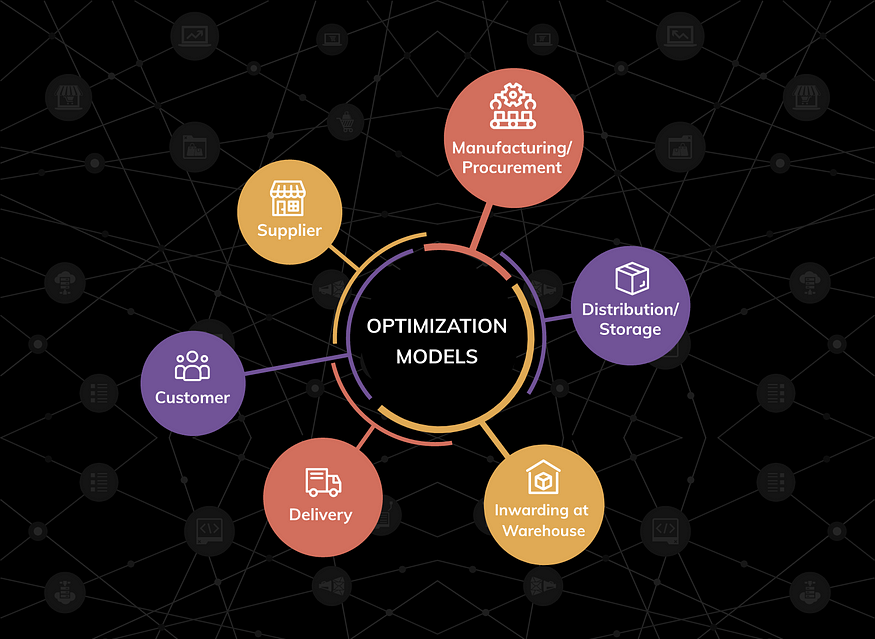
Introduction to Optimisation Problems in e-Commerce Supply Chain

The e-Commerce industry is a fertile ground for Data Science problems. The data science models are adapted by the internet commerce to achieve improved efficiency as well as better customer experience. In this blog, we discuss a number of optimisation problems that provide such advantages in the B2C (Business-to-customer) e-commerce industry. We focus on those problems that are formulated formally as optimisation problems in B2C e-Commerce and are solved by conventional optimisation or through random search/meta heuristic methods. Like every...

Read
Post Image

Genetic Algorithms in Pattern Recognition

Through the years, Nature inspired computing [1] has been adapted by the computer science community to address challenging real-life problems. Biology-inspired and Physics-inspired processes have a huge influence on computer science, optimisation and machine learning. Darwin’s theory of natural evolution has inspired Genetic Algorithms. In this blog, we focus on Genetic Algorithms and two of its applications in the domain of pattern recognition. In the sections that follow, we discuss fundamentals of genetic algorithms, pattern recognition, problem encoding, and two...

Read
Post Image

Knowledge graphs from complex text

The trick is to make everything simple ! Knowledge graphs are becoming increasingly popular with different applications in AI, due to their ability to render a cognitive representation of unstructured data, that readily allows for reasoning and information extraction. Knowledge graph (KG) is a directed labelled graph. In case of sentences from text datasets, the nodes of the graph are constituted by subjects or objects, and edges are constituted by verbs. Equivalently, a KG can be detailed as a set...

Read
Post Image

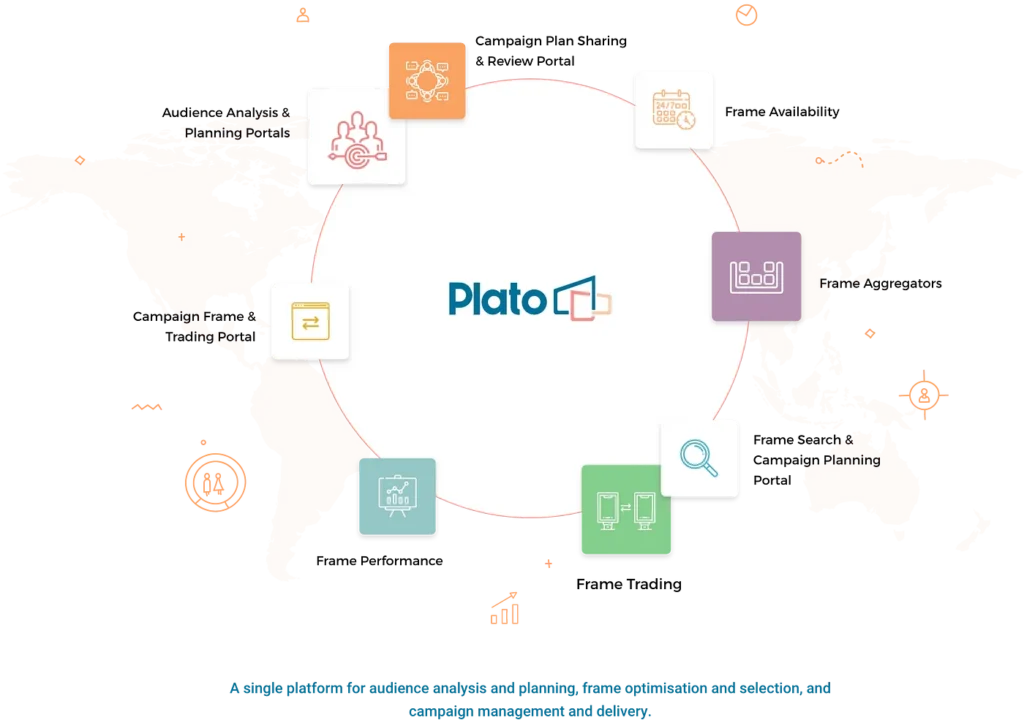
Data science-led, game-changing solutions to disrupt OOH media

Out Of Home advertising has seen rapid growth in the UK. In 2019, OOH advertising revenue rose 7.6% from 2018 to £1.3bn. However, OOH, by and large, has operated as an offline channel until recently. OOH agencies have been traditionally managing and running campaigns manually. From campaign planning to media buying, pricing, placement and tracking, every step of the process is manual. The lack of industry standards add another layer of complexity by creating information silos that in turn make...

Read