AI/ML

Post Image

An Agile Kickstart with Generative AI for Business Analysis

Image courtesy of Adobe Stock Leveraging artificial intelligence (AI) tools can significantly expedite the business analysis process. By utilising advanced AI models like GPT, analysts can quickly analyse problem statements, define high-level features and objectives, and generate epics and user stories. AI tools can streamline requirements gathering and save time and effort while enabling structured and organised analysis. As part of an exploratory exercise, we tried to find out how OpenAI's GPT can be leveraged to kickstart the business analysis...

Read

Post Image

Optimising Software Engineering Practices with AI

In the world of software development, Generative AI has been a topic of both excitement and concern. Its potential to automate and enhance various aspects of the development process raises questions about its impact on the developer community. As developers, it is crucial to understand the reality behind the hype and explore how Generative AI can be effectively utilised in real-world project scenarios.In this blog series, we capture our process and learnings from an experiment to develop a time-tracking application...

Read
Post Image

Test Driven Generation — Use AI as a pair for programming.

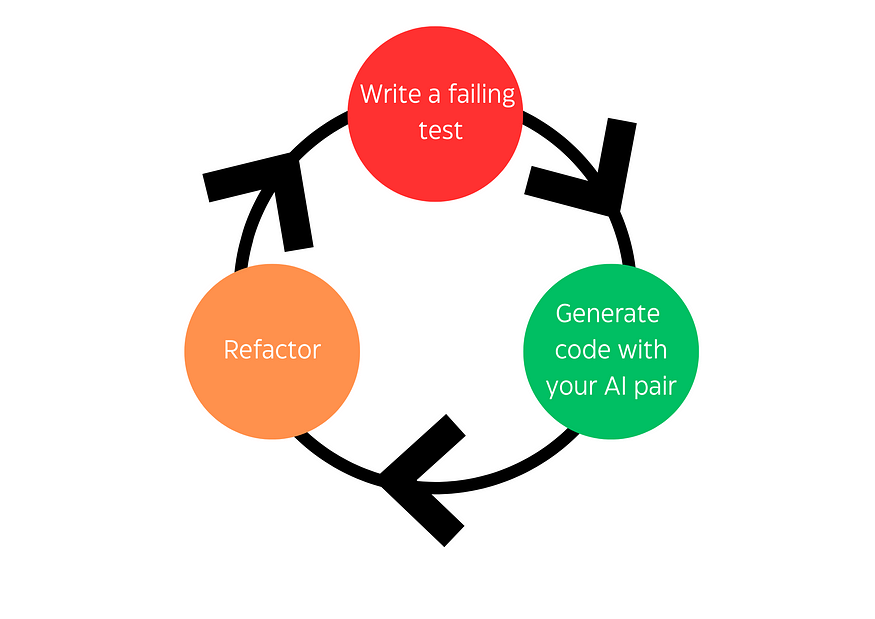
Written by Amitb and Vighnesh Pathrikar Test Driven Generation Cycle Have you ever found yourself struggling to refactor your code to adhere to SOLID principles or convert user requirements into code? Did TDD or Test-Driven Development feel slow? Have you ever wished for a tool that could make this process easier and more efficient? Well, look no further! With the latest generative AI solution, ChatGPT, you can now easily refactor your code, convert user requirements into code, and even create tests — all...

Read
Post Image

Introduction to Optimisation Problems in e-Commerce Supply Chain

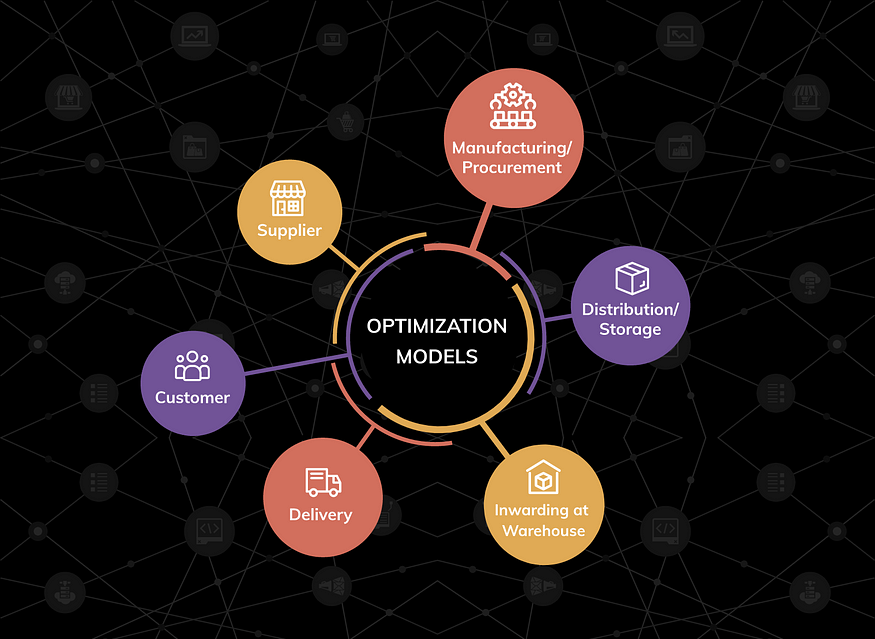
The e-Commerce industry is a fertile ground for Data Science problems. The data science models are adapted by the internet commerce to achieve improved efficiency as well as better customer experience. In this blog, we discuss a number of optimisation problems that provide such advantages in the B2C (Business-to-customer) e-commerce industry. We focus on those problems that are formulated formally as optimisation problems in B2C e-Commerce and are solved by conventional optimisation or through random search/meta heuristic methods. Like every...

Read
Post Image

Genetic Algorithms in Pattern Recognition

Through the years, Nature inspired computing [1] has been adapted by the computer science community to address challenging real-life problems. Biology-inspired and Physics-inspired processes have a huge influence on computer science, optimisation and machine learning. Darwin’s theory of natural evolution has inspired Genetic Algorithms. In this blog, we focus on Genetic Algorithms and two of its applications in the domain of pattern recognition. In the sections that follow, we discuss fundamentals of genetic algorithms, pattern recognition, problem encoding, and two...

Read
Post Image

Knowledge graphs from complex text

The trick is to make everything simple ! Knowledge graphs are becoming increasingly popular with different applications in AI, due to their ability to render a cognitive representation of unstructured data, that readily allows for reasoning and information extraction. Knowledge graph (KG) is a directed labelled graph. In case of sentences from text datasets, the nodes of the graph are constituted by subjects or objects, and edges are constituted by verbs. Equivalently, a KG can be detailed as a set...

Read
Post Image

Data science-led, game-changing solutions to disrupt OOH media

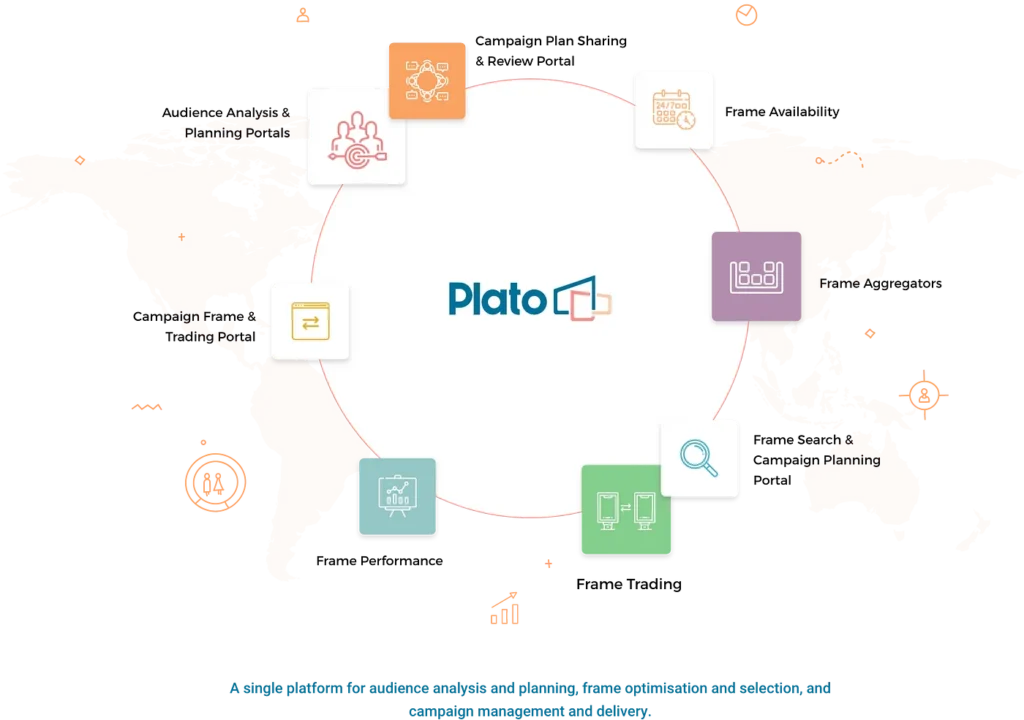
Out Of Home advertising has seen rapid growth in the UK. In 2019, OOH advertising revenue rose 7.6% from 2018 to £1.3bn. However, OOH, by and large, has operated as an offline channel until recently. OOH agencies have been traditionally managing and running campaigns manually. From campaign planning to media buying, pricing, placement and tracking, every step of the process is manual. The lack of industry standards add another layer of complexity by creating information silos that in turn make...

Read
Post Image

The impact of the evolution of data on business

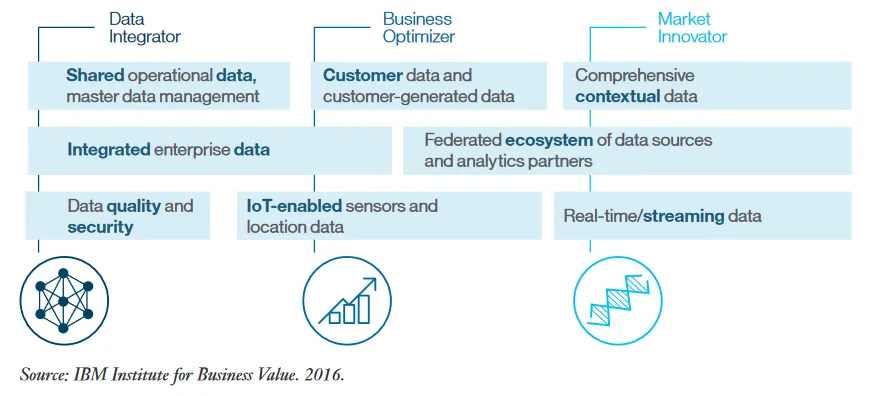
At the turn of the century, the internet made remote learning a reality. Propelled by the advent of cloud computing and AI coupled with burgeoning global internet penetration, the e-learning market grew at an exponential rate and became a $200 billion behemoth in two decades. The coronavirus pandemic further created an unprecedented demand for e-learning among students, corporates, and healthcare professionals. In the next five years, the industry is expected to nearly triple in size. At Sahaj, we believe it...

Read