The Background
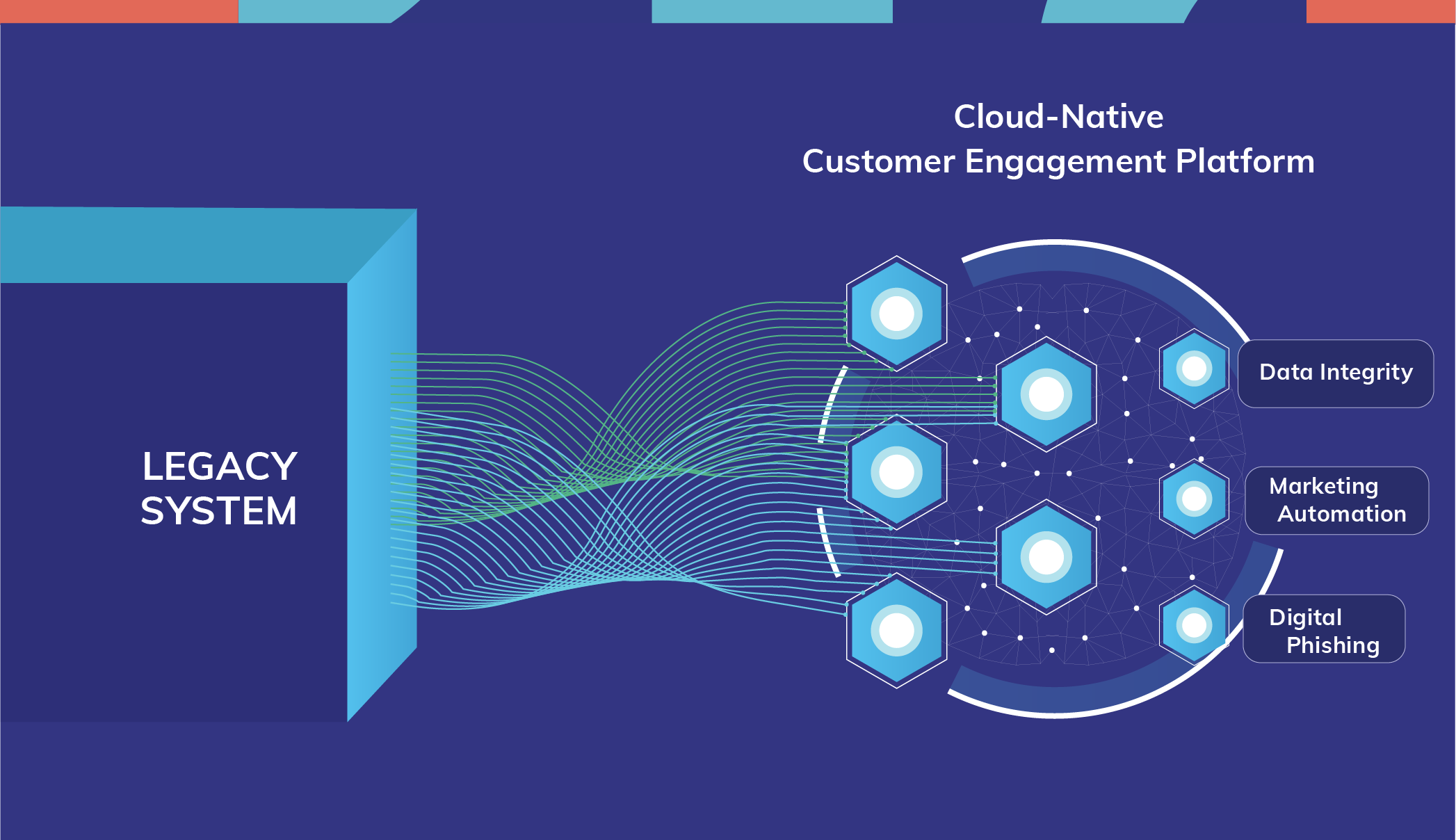
When you look at a company like Springer Nature, a global leader in academic publishing, you see a business built on connecting authors with their readers. It helps advance discoveries by publishing reliable research. But as is often the case with successful organizations, growth through mergers and acquisitions left their marketing technology in a complex state with fragmented systems. This made the simple goal of reaching the right author with the right message at the right time a significant challenge.
For us, the challenge was clear: move this vital author engagement function from their legacy SAP Marketing Cloud to a modern Customer Engagement Platform (CEP), Braze. This wasn’t just a platform swap; it was a modernization journey to create a clean, scalable, and unified data foundation.
Our Approach: Phased and Focused
The key to any big migration is not to move everything at once, but to prove the concept with the most critical pieces. Our strategy focused on delivering immediate value while building the infrastructure for long-term success.
The Ask
We had four needs to address:
Migrate Core Journeys: Get essential engagement paths, like long-term author engagement programs running on the new platform.
Zero Disruption: Move data seamlessly from SAP to Braze.
Advanced Personalization: Enable the marketing team to segment and personalize communications far beyond what the old system could do.
Data Harmony: Combine data to give clear view across systems and have data, including consent, in one place.
Core Technology Stack
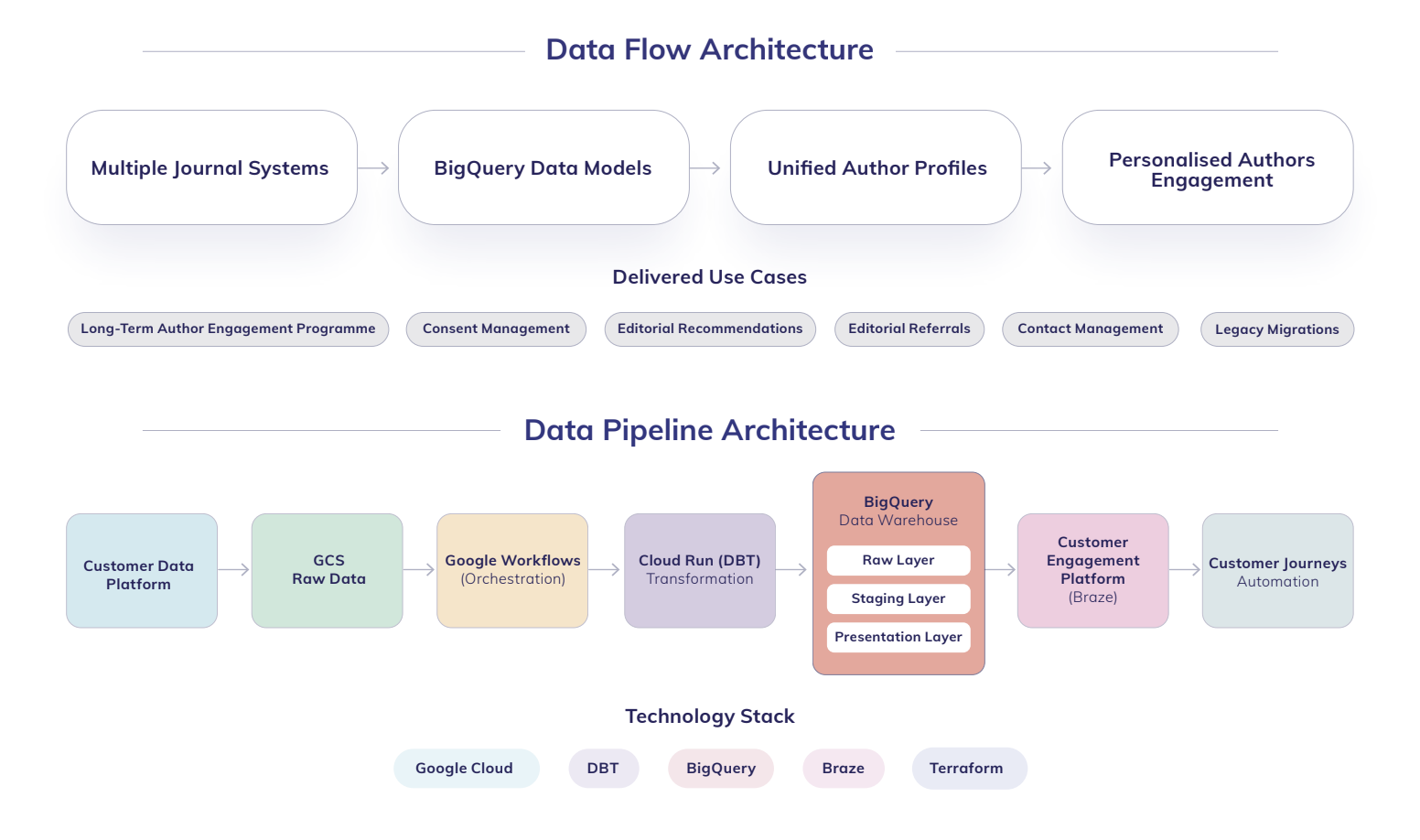
To achieve this, we built a modern, cloud-native data stack. We kept the architecture simple, to be able to build a scalable and robust data infrastructure for the customer engagement platform:
Google Cloud Storage (GCS): This served as our centralized data lake, holding all the raw and processed information.
BigQuery: Our data warehouse, acting as the central hub for our data models and the engine for fast data retrieval.
Cloud Run & Google Workflows: Used for running the heavy data processing jobs and orchestrating the complex flow of data.
DBT (Data Build Tool): This was crucial for writing, testing, and versioning all the SQL that transformed raw data into clean, unified customer profiles.
Terraform: Our method for managing all this infrastructure as code, ensuring automated and repeatable deployments.
Segment CDP: The customer data platform that fed harmonized profile data directly into Braze.
Architecture Flow
The Results: Reliability and Performance
The two most important technical achievements in a migration are reliability and performance. We made sure to deliver on both. During the complex migration of author journeys from SAP to Braze, we achieved near-perfect 99.9% data integrity, ensuring that critical author relationships and historical data were preserved. No author was left behind, and no engagement journey was broken. Additionally we unified consent, identity, and behavioral data within BigQuery, finally giving the marketing and editorial teams a single source of truth. This allowed the marketing team to achieve its core goal of reaching the right author with the right message at the right time, powered by a complete and consistent view of the author. This directly enables advanced segmentation and “right-time, right-message” personalization.
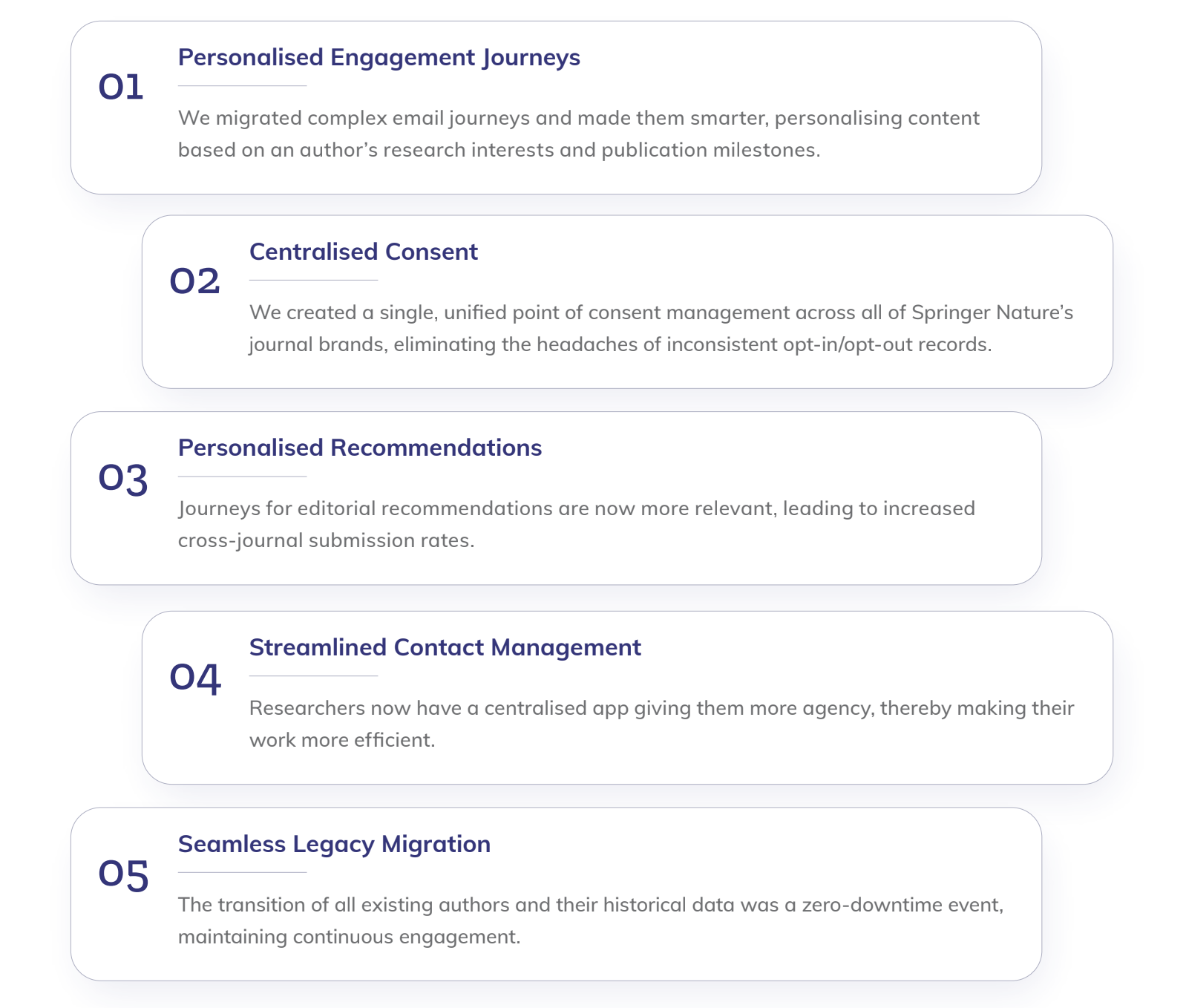
Five Core Use Cases, Transformed
This platform enabled significant improvement across five core use cases for Springer Nature’s marketing modernization project. These were instrumental in improving the editorial team’s efficiency and enhancing the author experience.
Conclusion: A Blueprint for Modernisation
What we built for Springer Nature is more than just a new marketing platform; it’s a reusable data harmonization framework and a scalable infrastructure pattern.
This foundational release serves as a blueprint for how a large enterprise can tackle complex legacy system migrations. Our success boiled down to a few key principles- a strategic phased approach, a focus on flexible identity resolution, comprehensive data harmonization, and building a scalable technical foundation to support the multi-year transformation ahead. We not only delivered immediate business value but also set the organization up for sustainable, data-driven growth.
“Sahaj set the foundation for long-term capability, solving our immediate problems at pace and equipping our in-house data engineering team to own and run the solution well beyond the engagement.”
Michael Schlueter,
VP, Springer Nature


