How Sahaj Software developed an AI assistant to help local governments leverage local data and established strategies to curate insights and develop policies that make a difference.
Introduction
The client is a US-based philanthropic organization that invests in worldwide efforts to enhance global health, combat poverty, and improve education for healthier and productive lives everywhere.
The Challenge: Using Data to Drive Local Impact
Local governments can struggle to turn data into impact. While they know good ideas exist elsewhere, finding and using the right ones for their specific community can often be tough.
Policy-making can often feel like guesswork because:
- Local context is essential to policymaking: Understanding a community goes far beyond demographic data. It means looking at things like how people move around, their ability to
access services, and the specific economic challenges they face. - Finding proven strategies is overwhelming: The best solution for a unique local problem can be lost in piles of academic papers and reports.
- Justifying policies is hard: Without clear data and evidence, it’s difficult to gain support, secure funding, and build trust.
- Lessons from similar places are difficult to access: Finding other communities with comparable challenges to learn from is manual and slow.
The Solution
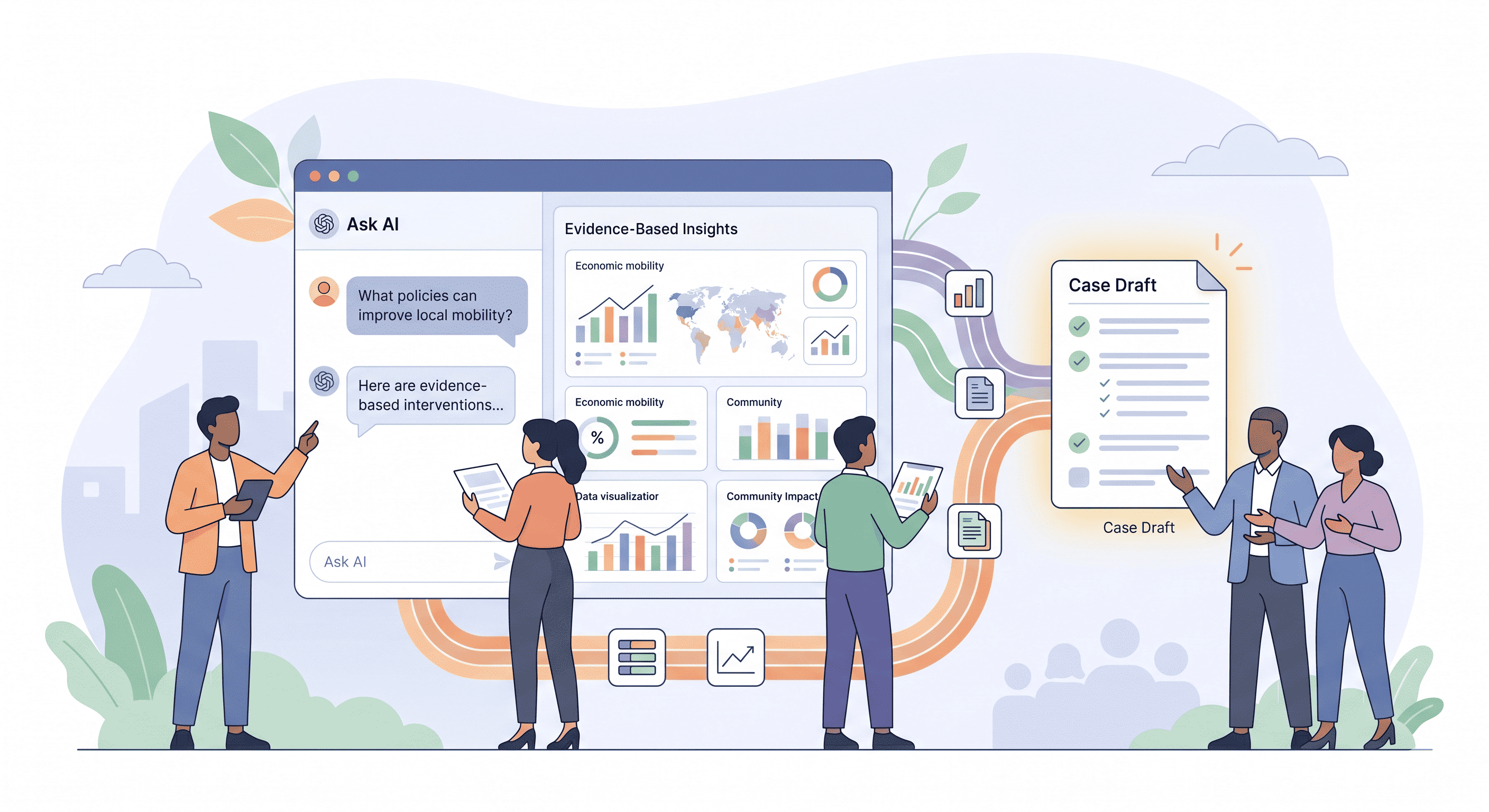
With clear, actionable evidence at their fingertips, community leaders can make more confident, tailored policy choices. There’s a big gap between what evidence shows and standing up a program to deliver results for residents. To bridge this gap, the client teamed up with Sahaj Software and their implementing partner, Results for America (RFA) to develop a state-of-the-art AI Assistant. Together, they created an AI-powered assistant to help local governments transform complicated local data into clear, actionable, and transparent policy insights, drawing upon established policy strategies and frameworks.
How it works
Built to help local leaders navigate RFA’s Economic Mobility Catalog, the AI assistant acts as a “smart co-pilot” for local leaders, guiding them as they:
- Research the Local Context: It goes beyond basic stats by analyzing mobility patterns, resource access, and economic factors to build a detailed picture, drawing from relevant
data sources and established methodologies. - Find Relevant Solutions: The tool was specifically designed to help local leaders navigate powerful tools and streamline that experience by researching the local context and finding relevant solutions.
- Help Build a Strong Case: Automatically generates proposals backed by solid data and evidence to help win support and funding.
- Facilitate Peer Learning: Quickly connects decision-makers with similar communities to learn from their successes, based on a comprehensive analysis of shared characteristics and policy outcomes.
What makes it different
- Comprehensive Context Mapping: Easily incorporates diverse data from user input to dynamic mobility metrics into a “local context” profile.
- Curated Knowledge Graph: Taps into a comprehensive, expertly curated database of evidence-based interventions, programs, and community case studies, precisely matched to local needs through advanced AI analysis.
- Explainable Recommendations (Explainable AI or XAI): For every suggestion, a plain-language explanation is provided, detailing why that strategy is the best match for local circumstances.
- Specialized Modules:
- Strategies and Outcomes: Find evidence-based strategies tied directly to community priorities.
- Case Maker: Automatically generates data-backed proposal drafts, synthesizing information from the local context and established policy models.
- Graph RAG and Guided Flow: Utilizes graph-powered reasoning and interactive dialog to assist in building robust policy cases step by step, drawing upon a rich repository of interconnected data and policy insights.
The Approach
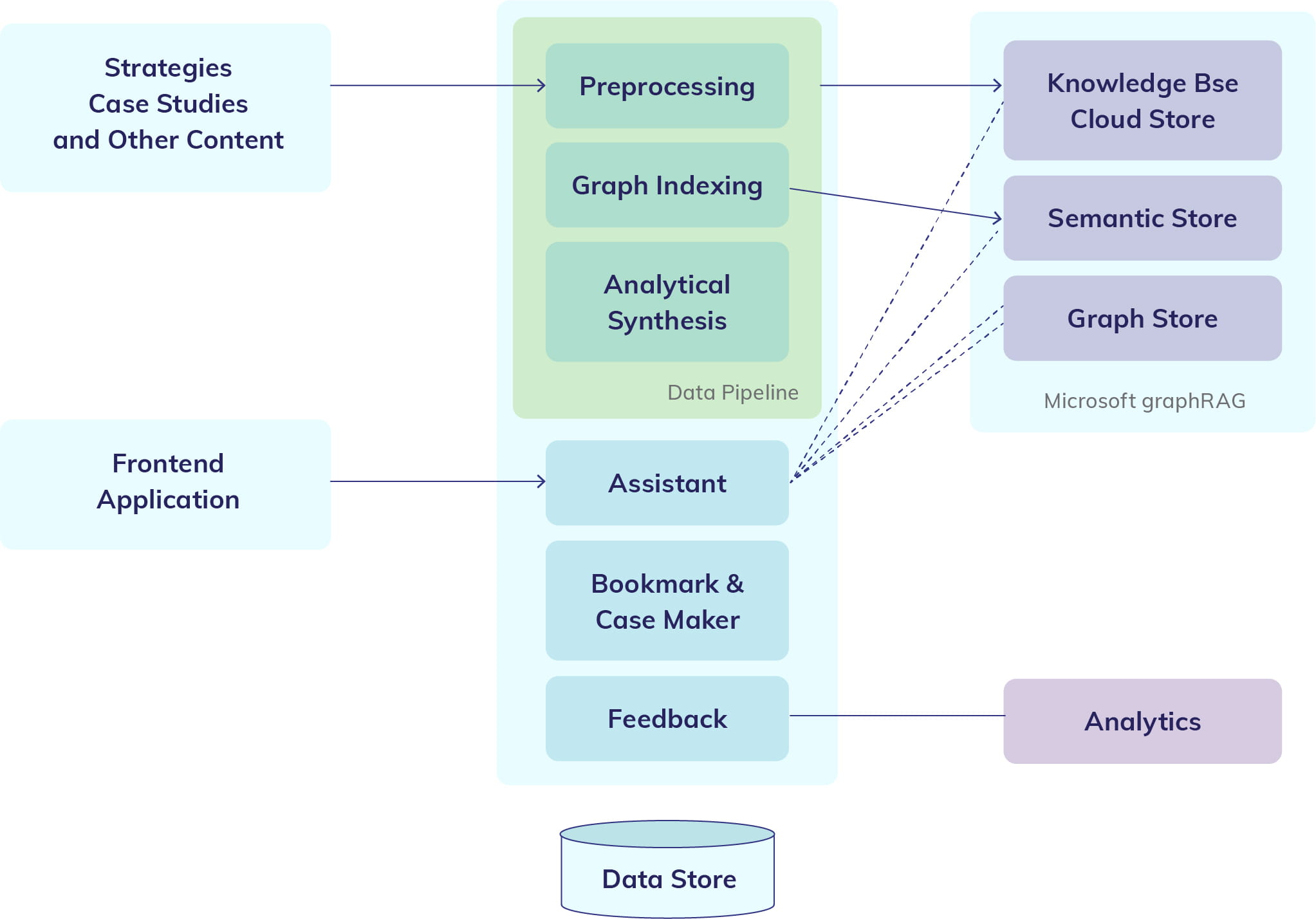
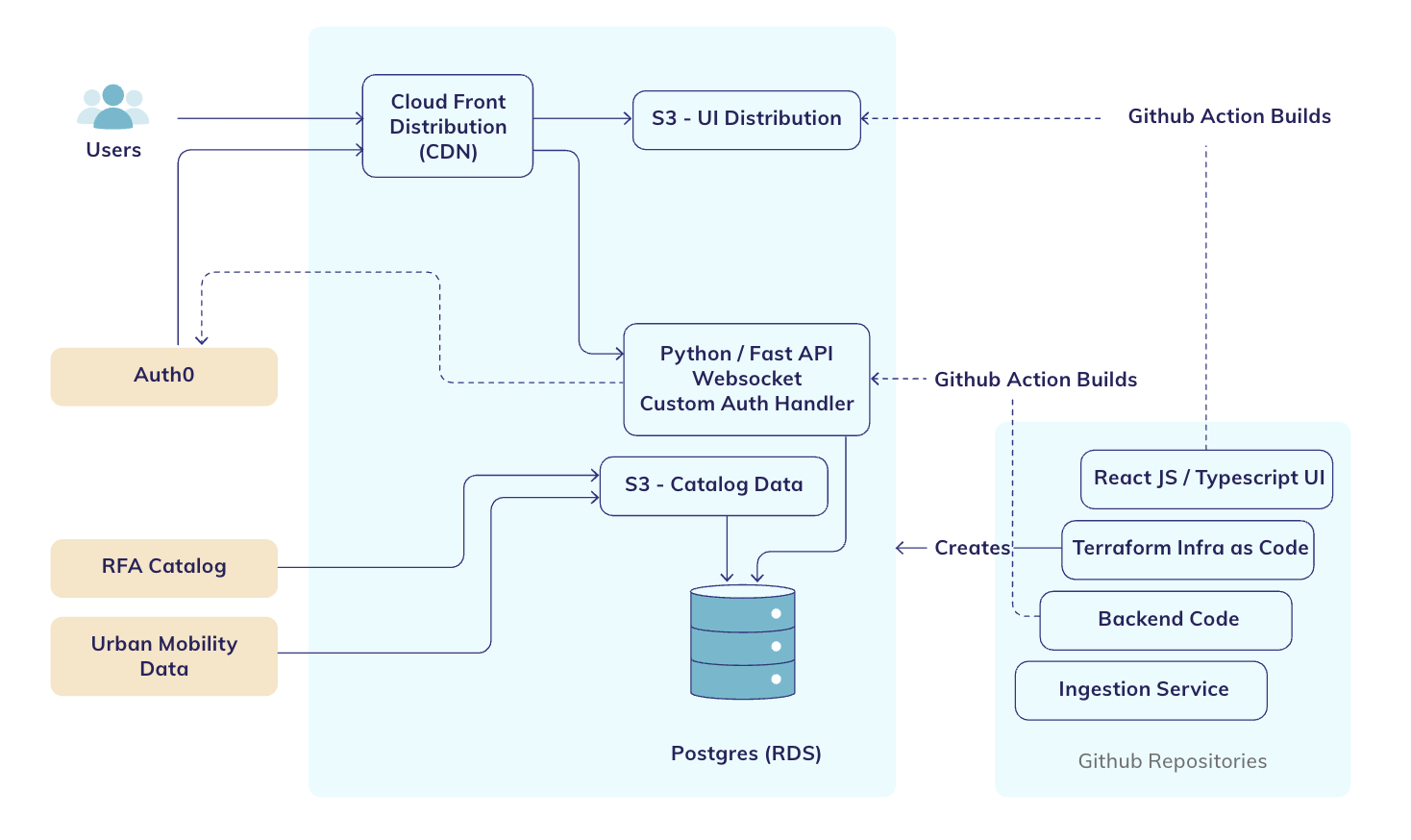
The project started with deep dives into the genuine challenges faced by local practitioners. Sahaj architected a robust, scalable system, integrating:
- Comprehensive data pipelines
- A modular knowledge graph
- Custom explainability layers
- Flexible, iterative feedback loops
Each development phase incorporated direct feedback from end users, ensuring an intuitive and impactful experience.
How it integrates with policy making
The AI assistant streamlines the policy-making workflow by enabling iterative refinement of recommendations, guiding users through the solution selection process, and automating the generation of comprehensive proposals.
- Practitioners can iterate, refining inputs to leverage the AI assistant in generating ever more precise, actionable recommendations, informed by their evolving context and a comprehensive knowledge base.
- Clear dialog flows walk users from defining their context through to solution selection and proposal creation.
- With the Case Maker, high-quality, justifiable proposals are produced in minutes —drastically reducing manual effort.
The Impact
This initiative’s impact bridges evidence and practice, fostering stronger local ownership, faster and clearer recommendations, peer learning, and a scalable solution.
- Finding and justifying strategies is fast, clear, and built on transparent evidence.
- Instantly connect to successful approaches from similar communities.
- Modular design means the solution grows with evolving challenges, across cities, counties, or regions.
The Outcomes
This collaboration between the client and Sahaj Software demonstrates how AI can enhance, not replace, expert-driven policy work. By retaining trusted data sources and introducing AI-assisted matching, the team has created a transparent, scalable workflow that streamlines policy development while ensuring human judgment and evidence integrity remain central.


