Learn how intelligent Engineering can increase productivity
Introduction
Expedition in a nutshell
Everyone talks about coding assistants as the big breakthrough in software delivery. However, writing code represents merely a fraction of this journey, accounting for only 10-20% of the total effort involved in software development.
Delivering good software has always involved more—starting with (the what) – researching the idea, defining and refining the product with user groups, requirements analysis, then moving on to planning and design (the how), then development and testing (the build), and finally deployment and maintenance (the implementation). Each of these activities requires different skills, processes, and tools—and each can now be meaningfully enhanced with modern AI. Whether it ’s uncovering insights during analysis, accelerating design decisions, boosting developer productivity, automating tests, or making deployment more resilient, AI is playing the role of a true end-to-end partner.
While the fundamental software development lifecycle (SDLC) — be it through the use of waterfall or agile methodologies—remains intact, the way organizations execute within it is ready for transformation. The opportunity is not about replacing the cycle, but about reimagining it with AI to unlock faster innovation cycles and smarter, more resilient product delivery. This is at the heart of what our intelligent Engineering approach delivers.
Greg Reiser, Head of Client
Partnerships, Americas talks
about applying AI across the
entire SDLC, adopting a
collaborative approach
over delegation, and using
AI to transform
organizational roles and
processes for better
innovation and efficiency.

 Highlights
Highlights
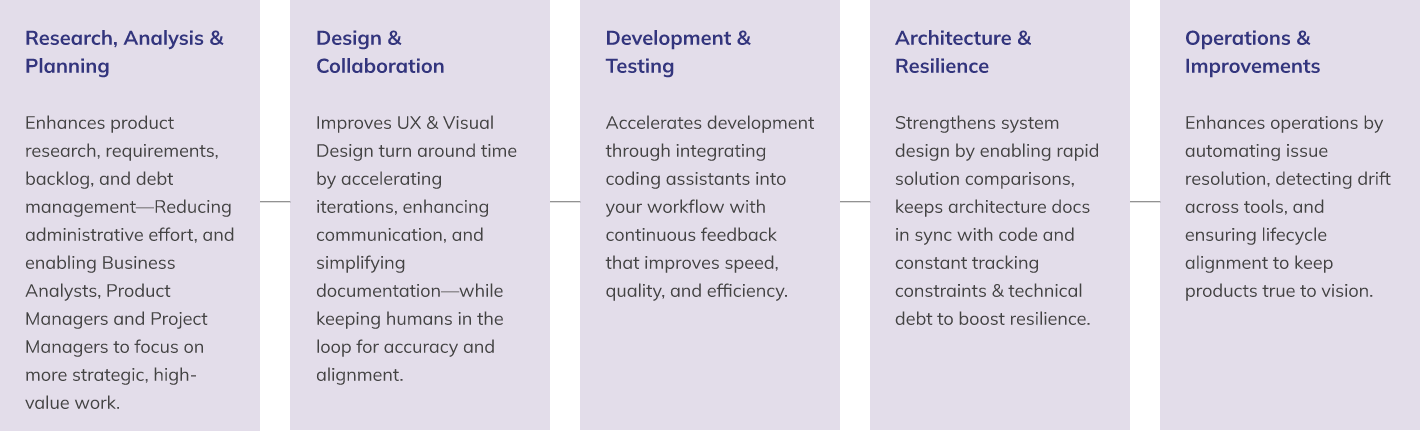
AI assistance in every phase of the SDLC — research, analysis, design, build, test, deploy, and feedback — significantly unlocks efficiency by cutting time spent on administrative tasks and empowering teams to focus on higher-value work like strategy, creativity, and informed decision-making. While product teams are struggling with Forming and Storming* (Callout to the Tuckman Model) with AI, the teams that have crossed the chasm into the Norming and Performing stages are seeing significant value additions in two key areas:
 Introduction Relevancy
Relevancy
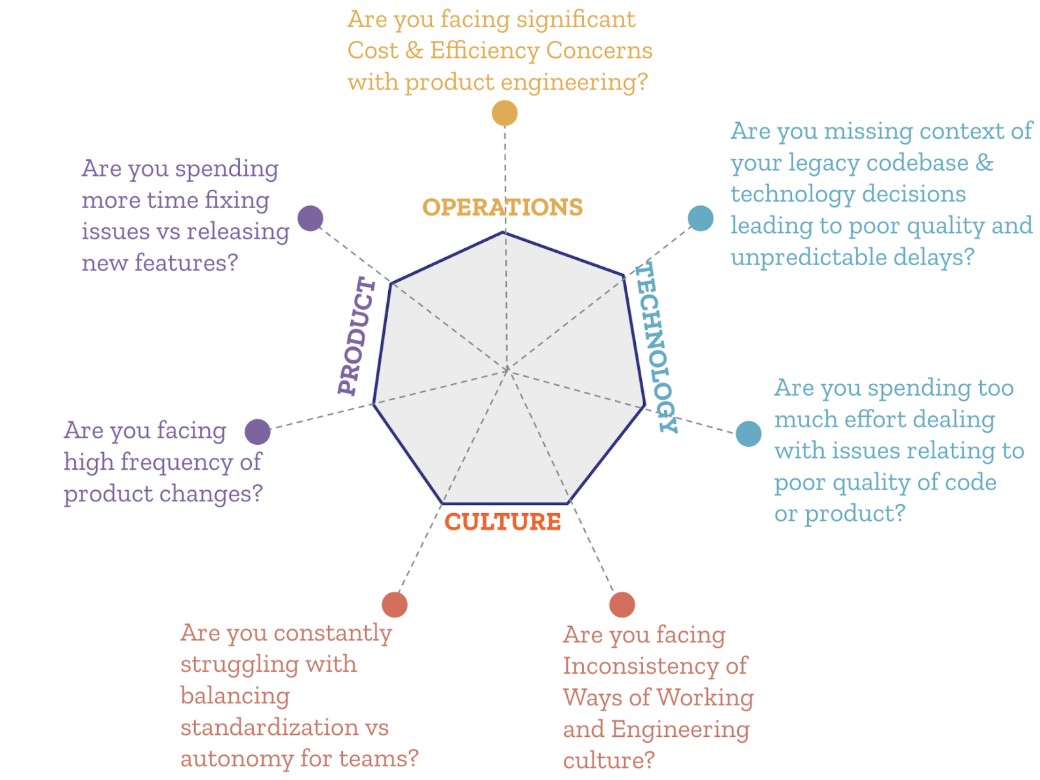
How would you answer these questions?
 Highlights Preparation
Preparation
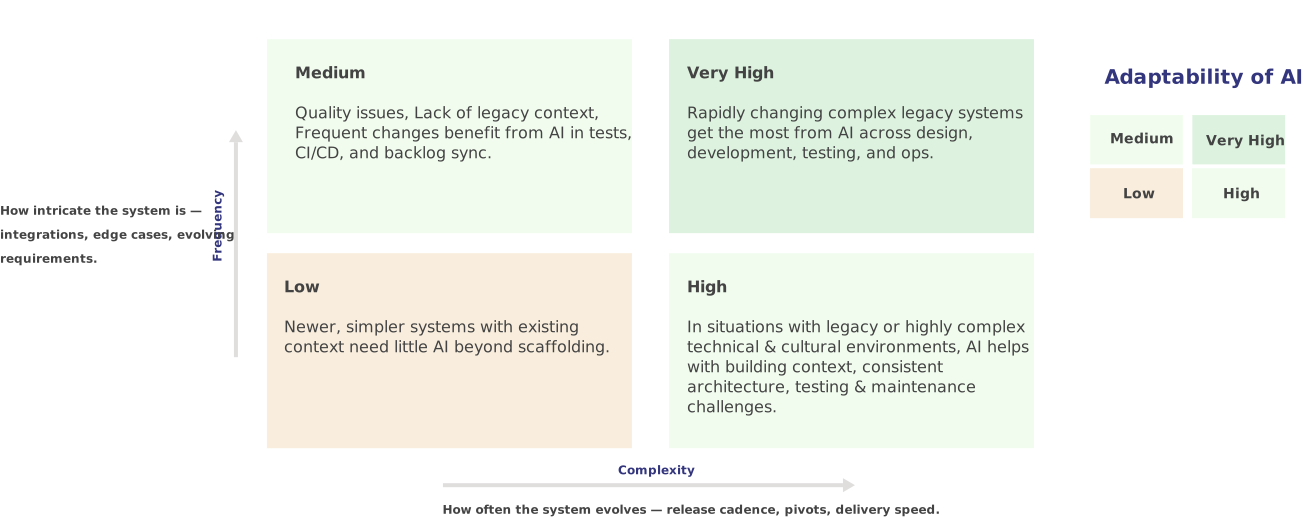
Selecting the right project to leverage AI in the SDLC requires careful preparation to in-terms of project and team context so that the journey has least blind spots and desired impact.

Early Stages
During early stages focus on “leading” indicators: developer sentiment, tool usage, and workflow metrics.
Survey
Conduct developer surveys and track AI usage statistics (active users, acceptance rates) as GitHub recommends.
Align
Use DORA‑style metrics to ensure speedups don’ t sacrifice quality. Align these KPIs to business outcomes (e.g. shorter time-to-market, fewer critical bugs).
Measure
Set “clear, measurable goals” for AI use and monitor both productivity and code quality over time
Relevancy ItineraryItinerary
While plenty of literature will point towards Vibe Coding being the next wave of software engineering, it’s the journey from Vibe coding to Viable coding that will help teams unlock the potential of AI in software engineering.
Adopting AI in software development requires a layered approach: organizations provide foundational guidelines, tool choices, and ecosystem patterns, while teams retain autonomy to adapt these to their specific context.
Sahaj’s intelligent Engineering framework isn’t meant to be prescriptive. It represents a collection of proven techniques and sensible defaults to be used as a guideline and adapted to your organisational needs.
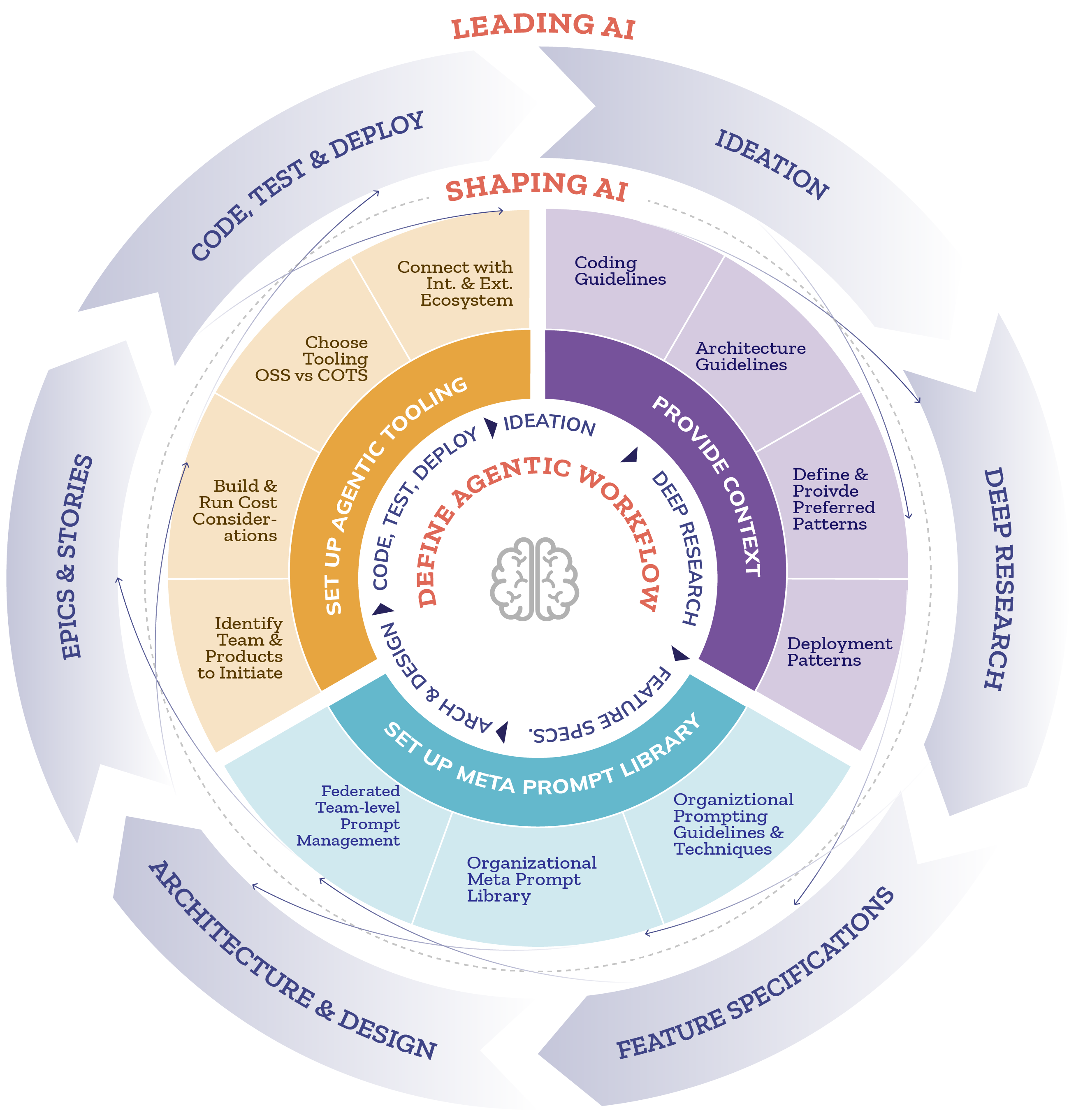
The intelligent Engineering Framework comprises two interlinked phases, Shaping the AI & Leading the AI, with a continuous learning and refining loop completing the connection.
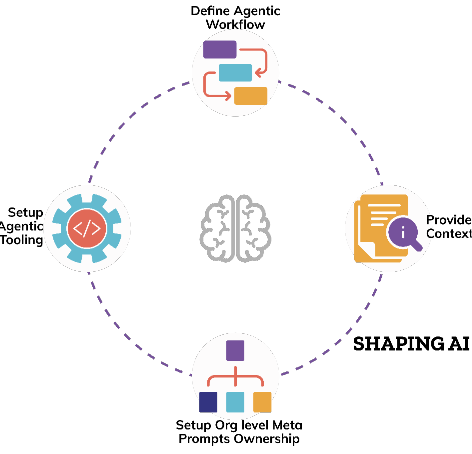
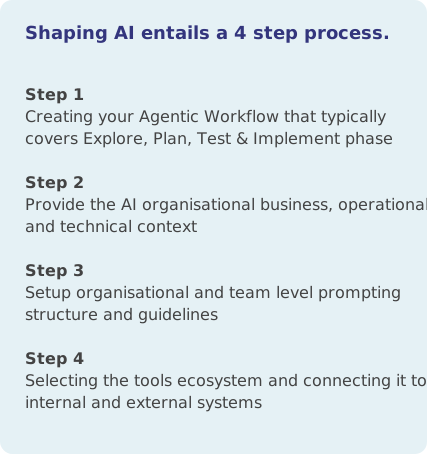
Phase 1, Shaping the AI, consists of Setting up the Workflow, Context & Prompt Engineering and Tooling at an organisational level while providing teams the flexibility to adopt and adapt and then execute on their adapted workflow. Start by Shaping the AI to your organisational or team needs.
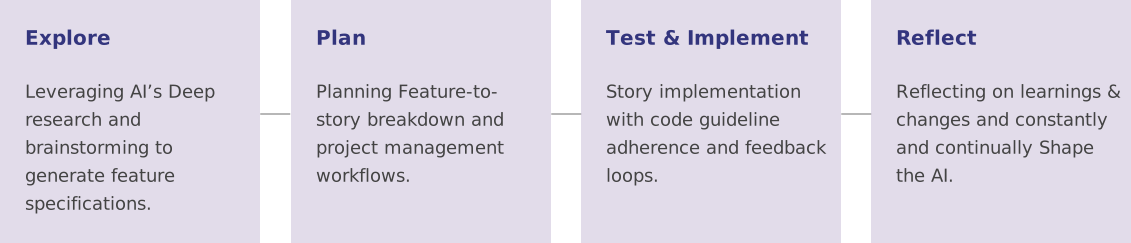
Phase 2 is about Leading the AI through the implementation and includes the following steps:

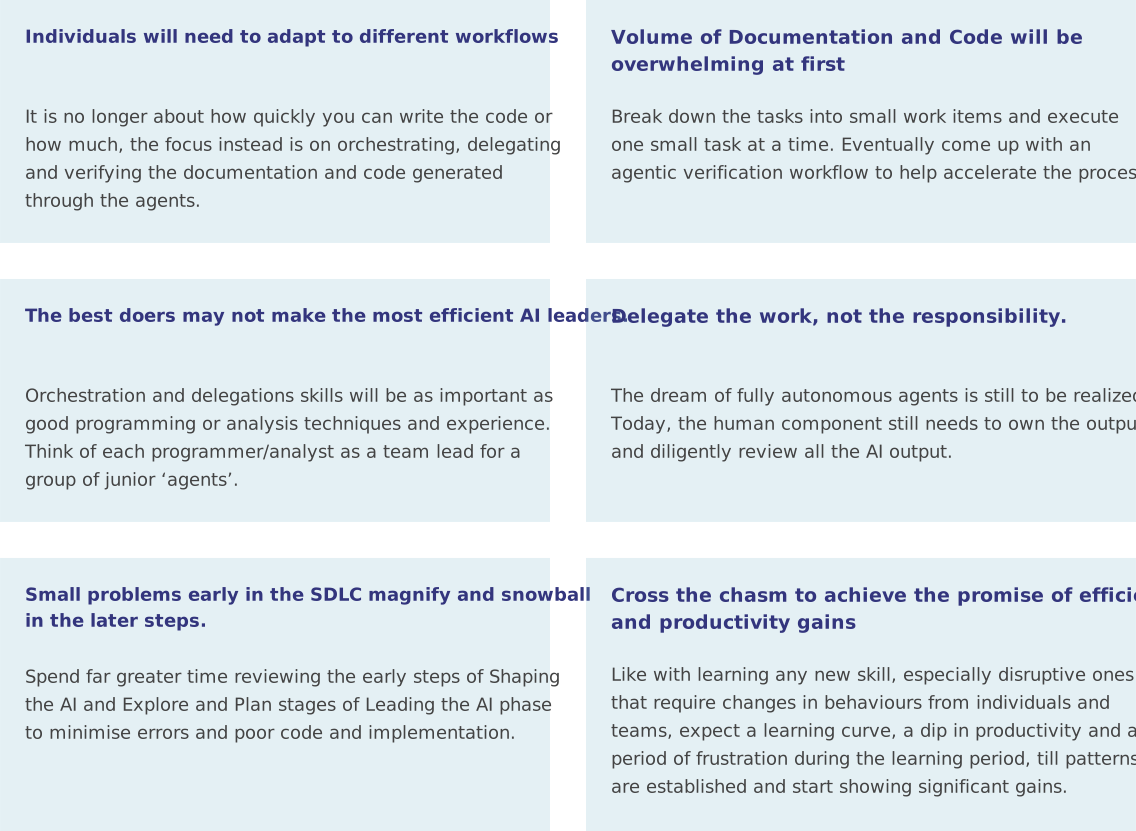
Before you embark on the journey, there are a few patterns that you need to consider. The journey to leveraging AI will involve learning new skills and behaviours and will initially be a disruptive change to the existing processes. Below are some behaviours to expect while going through the process:
 RESTART